Chemung County Historical society in Elmira, NY currently features an exhibit of Victorian clothing called
Fabrics of our Lives, Great Life Moments through Clothing, 1860-1900. Yesterday I had the pleasure of viewing the many dresses, suits and childrens' frocks with my husband, who took some delightful pictures.


These two gowns appear in a center display depicting the changing hours of a woman's wardrobe, from a morning dress to the two evening gowns seen here. The first is a golden yellow silk brocade from the 1890's, meant for wearing from 10pm to midnight. The second one is a creamy gold silk taffeta and brocade gown, circa 1880's, meant to be worn from 8pm to 10 pm.
Following is a rear view of this same exquisite piece.

The fine quality of the color and condition in which these dresses remained amazed me. And the utterly petite figure a Victorian woman must have had also made me marvel. These are small gowns, with shoulder widths more like a child's than the average modern woman's. Also noted were the layers of underpinnings beneath these dresses. From chemise, to petticoats to bustles or hoops, a Victorian woman wore a full twenty pounds of clothing on average.

The dark brown piece seen here is a late morning walking dress, meant for wearing out of the home for calling on friends or a trip to the post office or for running any miscellaneous errands. Note its longer sleeves and higher neckline. This would have been worn after 10 am up through the noon hour. I imagine with its tailored jacket it would have been meant for cooler weather. It strikes a somewhat formal image.

Next, this afternoon tea dress begins to relax the neckline and was meant for entertaining friends at home. This would be worn from one until four in the afternoon. Again, the fine condition of this fragile silk material was impeccable, and the colors of the chocolate and red medallions over the pale background just popped. It lacks some of the ornamentation of other gowns, and was displayed without bustle.

Finally, this last dress pictured is a most basic frock, a morning dress in which a working class wife would perform her household chores. Even the more well-to-do wore morning dresses as they prepared for the day. This would be worn from 8am until 10am.
This is part one of my series on Victorian clothing, covering the changes in a Victorian woman's apparel. A well-to-do woman of this age could change clothes up to six times in a typical day. Middle class women tried to emulate wealth with lavish styles, but the truly wealthy distinguished themselves by clothing with more ornamentation and finer fabric.
Next post, we'll view the childrens' clothing collection.

 Posts
Posts


 This trio of wedding couture shows a gentleman's tuxedo and tails, bowler hat, a lovely wedding gown in a color other that white. White was not made vogue for brides until after Queen Victoria wore hers in the 1840's. Also pictured is a bodice of another wedding ensemble. The bodice is seen in greater detail here.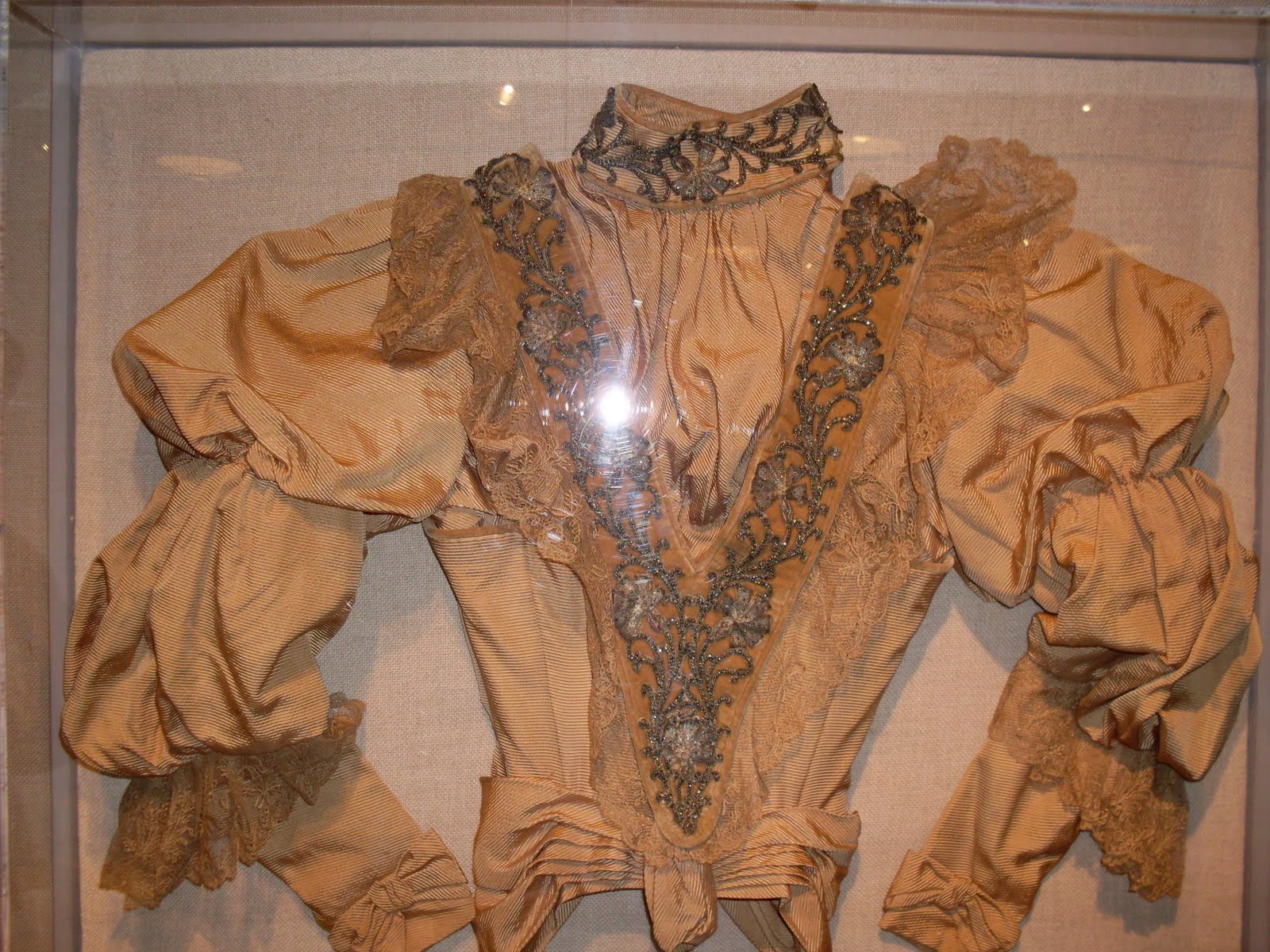
 Below we see pictured: Marriage certificates, 1864 and 1884
 On October 6, 1880, Susy Clark married Elmer Dean at Elmira’s Grace Episcopal Church


